
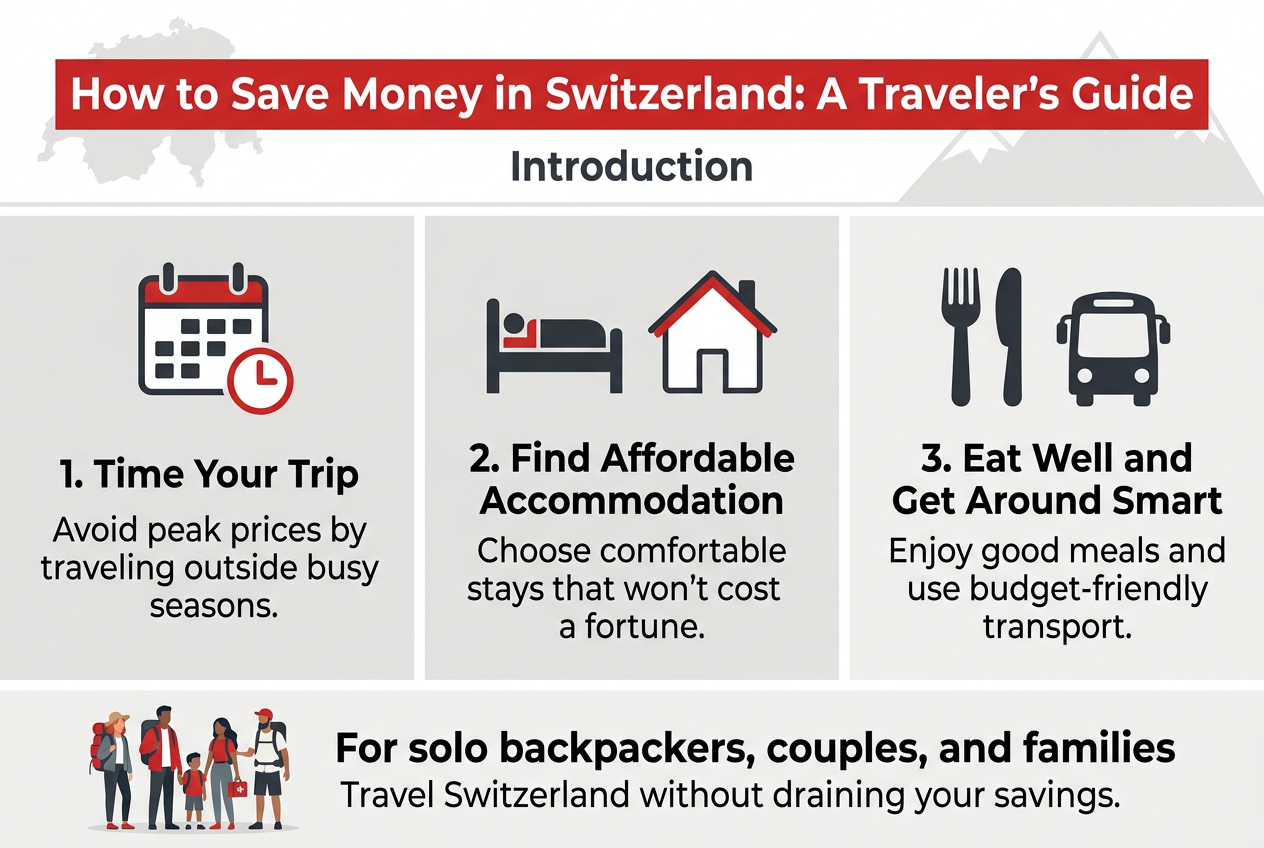
How to Save Money in Switzerland: A Traveler's Guide
Switzerland is stunning — and yes, it's expensive. But traveling here on a budget is absolutely doable if you know where to cut costs without cutting corners.
This guide is for budget-conscious travelers who want to experience Switzerland without draining their savings — whether you're a solo backpacker, a couple on a tighter budget, or a family trying to stretch every franc.
Here's what we'll cover: how to time your trip to dodge peak prices, where to find comfortable accommodation that won't cost a fortune, and how to eat well and get around without spending like a Swiss banker.
Let's get into it.
Plan Your Trip at the Right Time to Cut Costs
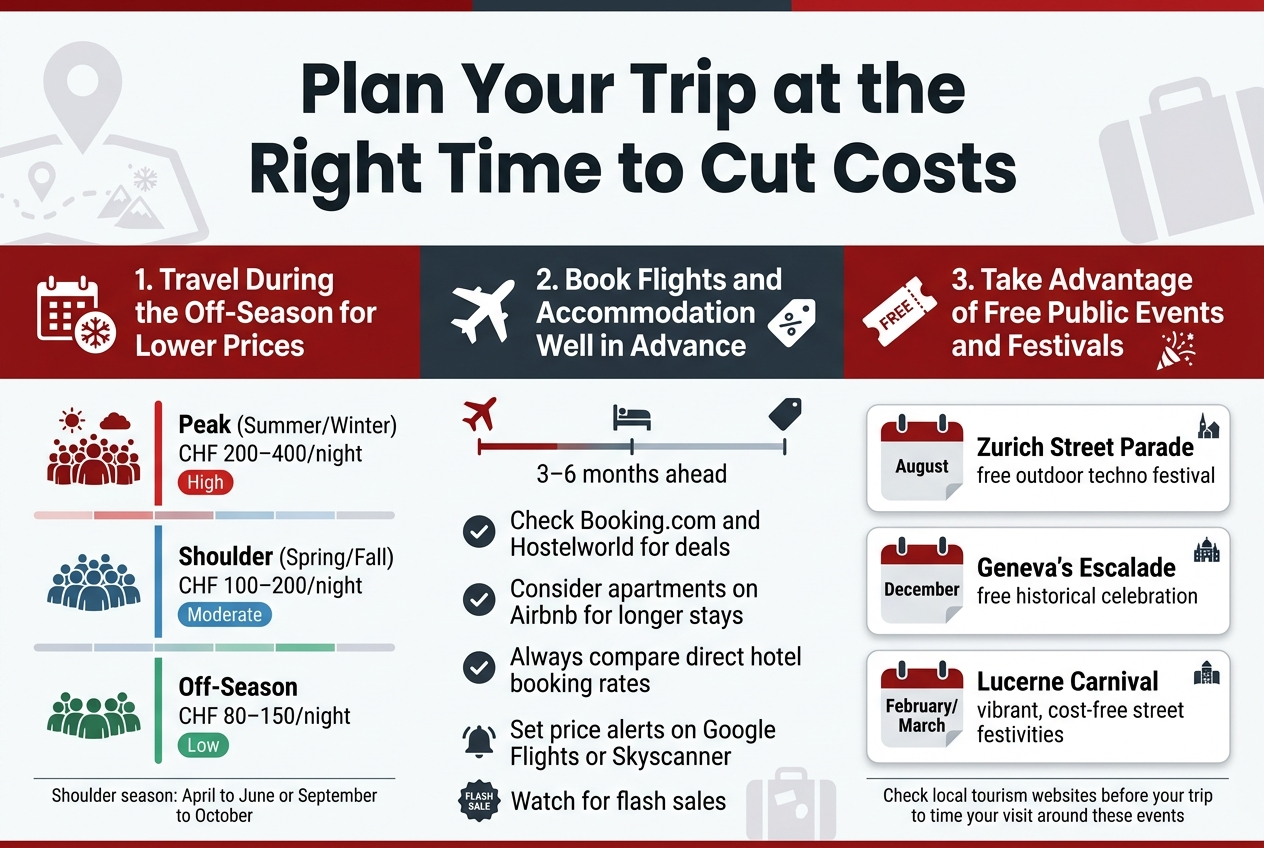
Travel During the Off-Season for Lower Prices
Switzerland's peak seasons (July–August and December–February) come with inflated hotel rates and crowded attractions. Visiting in shoulder season—April to June or September to October—can slash costs significantly while still offering stunning scenery.
| Season | Avg. Hotel Cost | Crowd Level |
|---|---|---|
| Peak (Summer/Winter) | CHF 200–400/night | High |
| Shoulder (Spring/Fall) | CHF 100–200/night | Moderate |
| Off-Season | CHF 80–150/night | Low |
Book Flights and Accommodation Well in Advance
Booking 3–6 months ahead typically locks in the best rates. Set price alerts on Google Flights or Skyscanner and watch for flash sales. For accommodation, smaller guesthouses and hostels often offer early-bird discounts not available on major platforms.
-
Check Booking.com and Hostelworld for deals
-
Consider apartments on Airbnb for longer stays
-
Always compare direct hotel booking rates
Take Advantage of Free Public Events and Festivals
Switzerland hosts dozens of free events year-round that locals genuinely love attending:
-
Zurich Street Parade (August) – free outdoor techno festival
-
Geneva's Escalade (December) – free historical celebration
-
Lucerne Carnival (February/March) – vibrant, cost-free street festivities
Check local tourism websites before your trip to time your visit around these events.
Find Affordable Accommodation Without Sacrificing Comfort
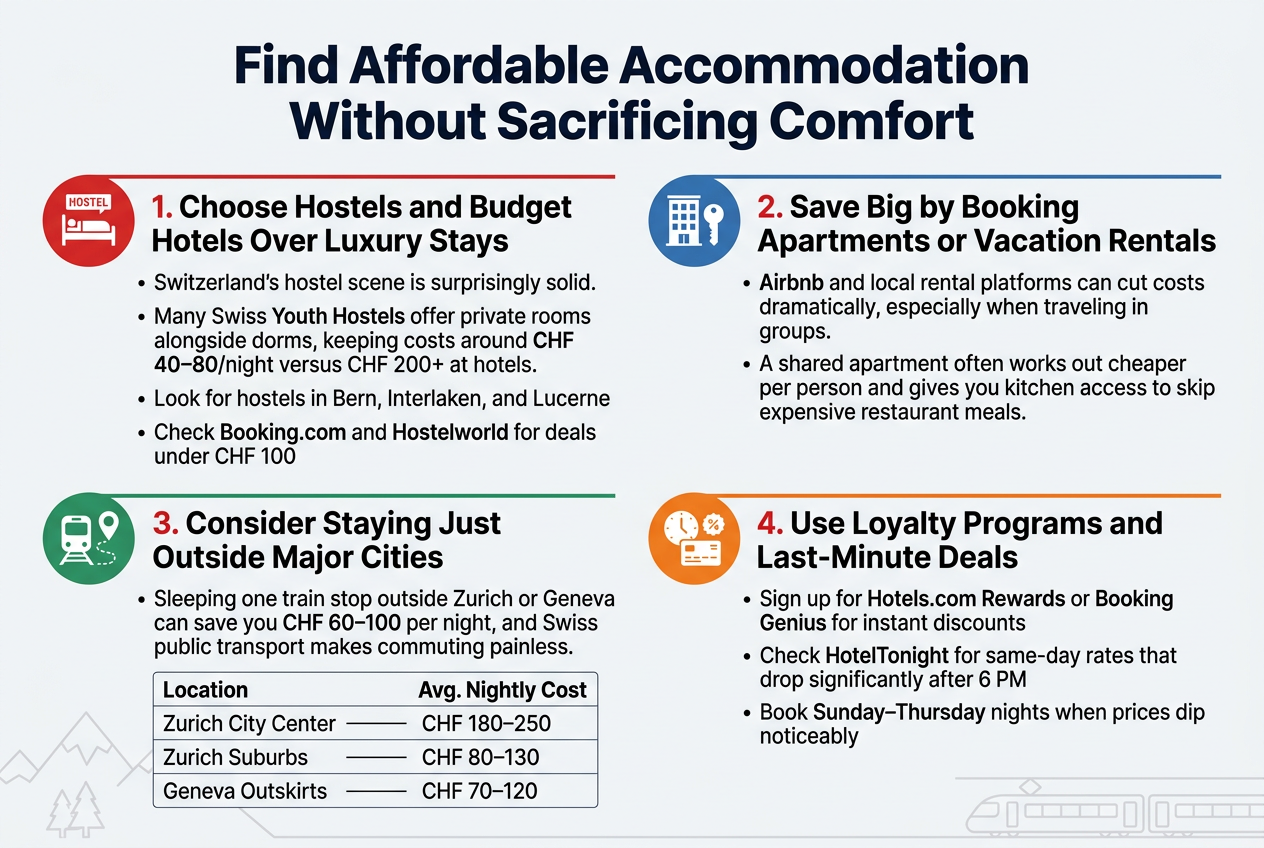
Choose Hostels and Budget Hotels Over Luxury Stays
Switzerland's hostel scene is surprisingly solid. Many Swiss Youth Hostels offer private rooms alongside dorms, keeping costs around CHF 40–80/night versus CHF 200+ at hotels.
-
Look for hostels in Bern, Interlaken, and Lucerne
-
Check Booking.com and Hostelworld for deals under CHF 100
Save Big by Booking Apartments or Vacation Rentals
Airbnb and local rental platforms can cut costs dramatically, especially when traveling in groups. A shared apartment often works out cheaper per person and gives you kitchen access to skip expensive restaurant meals.
Consider Staying Just Outside Major Cities
Sleeping one train stop outside Zurich or Geneva can save you CHF 60–100 per night, and Swiss public transport makes commuting painless.
| Location | Avg. Nightly Cost |
|---|---|
| Zurich City Center | CHF 180–250 |
| Zurich Suburbs | CHF 80–130 |
| Geneva Outskirts | CHF 70–120 |
Use Loyalty Programs and Last-Minute Deals
-
Sign up for Hotels.com Rewards or Booking Genius for instant discounts
-
Check HotelTonight for same-day rates that drop significantly after 6 PM
-
Book Sunday–Thursday nights when prices dip noticeably
Eat Well Without Overspending
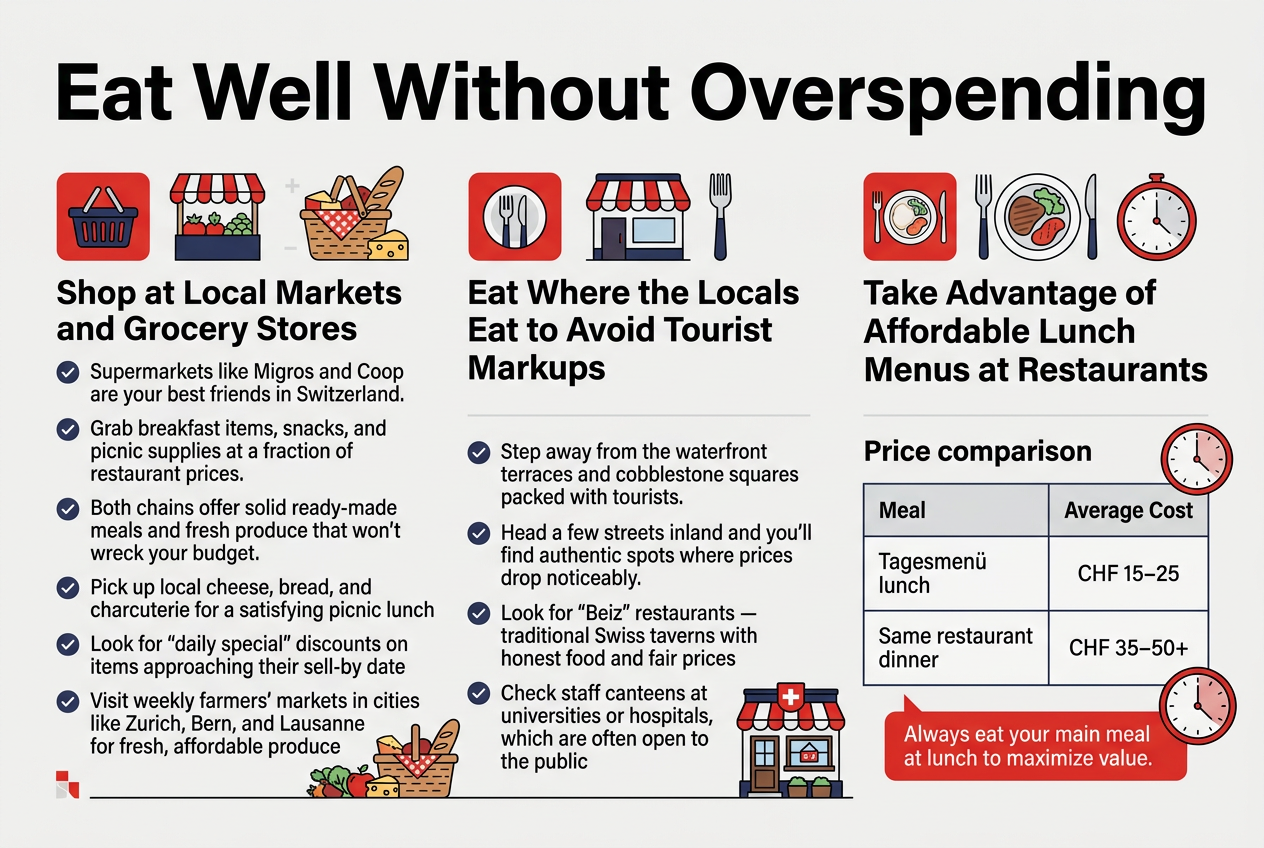
Shop at Local Markets and Grocery Stores
Supermarkets like Migros and Coop are your best friends in Switzerland. Grab breakfast items, snacks, and picnic supplies at a fraction of restaurant prices. Both chains offer solid ready-made meals and fresh produce that won't wreck your budget.
-
Pick up local cheese, bread, and charcuterie for a satisfying picnic lunch
-
Look for "daily special" discounts on items approaching their sell-by date
-
Visit weekly farmers' markets in cities like Zurich, Bern, and Lausanne for fresh, affordable produce
Eat Where the Locals Eat to Avoid Tourist Markups
Step away from the waterfront terraces and cobblestone squares packed with tourists. Head a few streets inland and you'll find authentic spots where prices drop noticeably.
-
Look for "Beiz" restaurants — traditional Swiss taverns with honest food and fair prices
-
Check staff canteens at universities or hospitals, which are often open to the public
Take Advantage of Affordable Lunch Menus at Restaurants
Swiss restaurants typically offer a "Tagesmenü" (daily menu) at lunchtime — a two or three-course meal for CHF 15–25, compared to double that at dinner.
| Meal | Average Cost |
|---|---|
| Tagesmenü lunch | CHF 15–25 |
| Same restaurant dinner | CHF 35–50+ |
Always eat your main meal at lunch to maximize value.
Get Around Switzerland for Less
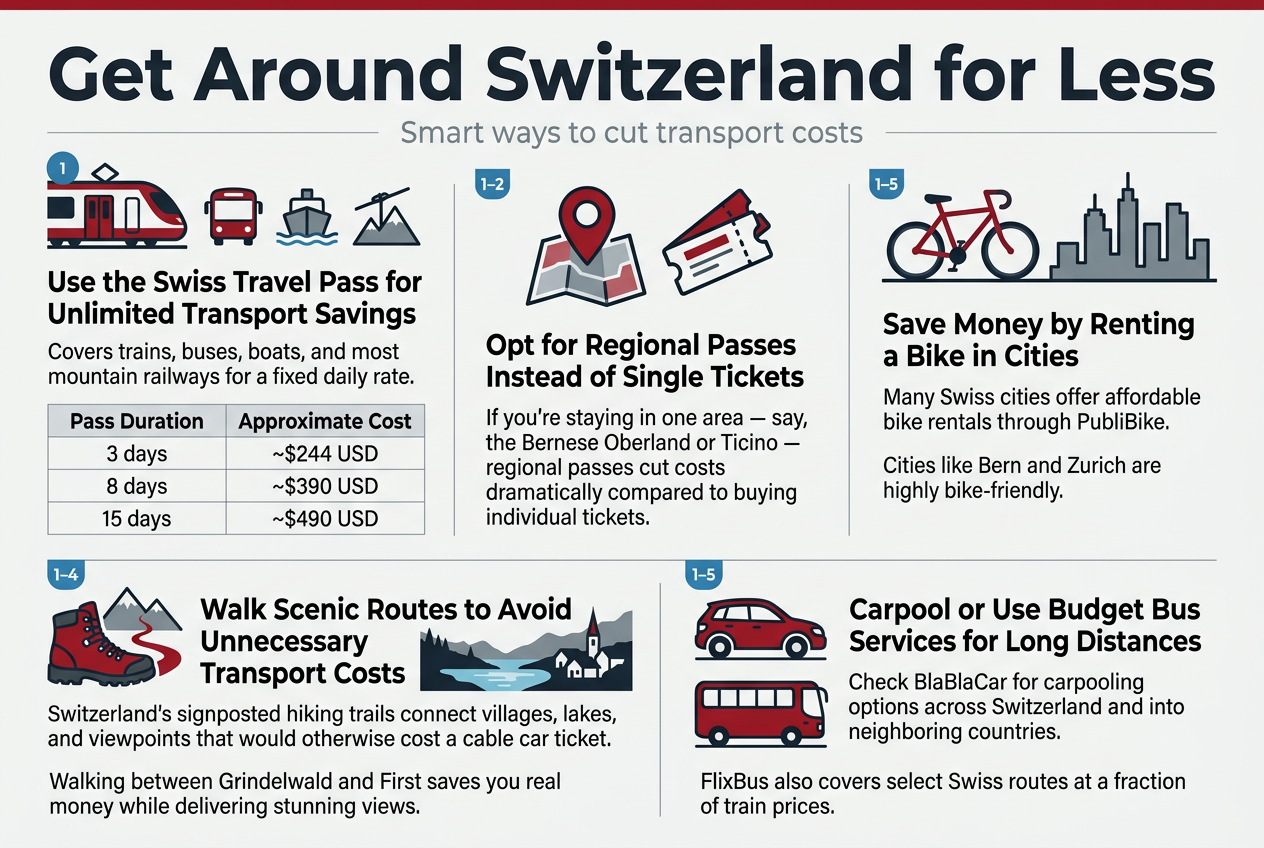
Use the Swiss Travel Pass for Unlimited Transport Savings
The Swiss Travel Pass covers trains, buses, boats, and most mountain railways for a fixed daily rate. It pays off fast if you're moving between cities regularly.
| Pass Duration | Approximate Cost |
|---|---|
| 3 days | ~$244 USD |
| 8 days | ~$390 USD |
| 15 days | ~$490 USD |
Opt for Regional Passes Instead of Single Tickets
If you're staying in one area — say, the Bernese Oberland or Ticino — regional passes cut costs dramatically compared to buying individual tickets.
Save Money by Renting a Bike in Cities
Many Swiss cities offer affordable bike rentals through PubliBike. Cities like Bern and Zurich are highly bike-friendly, making it a practical, cheap way to get around without touching public transport.
Walk Scenic Routes to Avoid Unnecessary Transport Costs
Switzerland's signposted hiking trails connect villages, lakes, and viewpoints that would otherwise cost a cable car ticket. Walking between Grindelwald and First, for example, saves you real money while delivering stunning views.
Carpool or Use Budget Bus Services for Long Distances
Check BlaBlaCar for carpooling options across Switzerland and into neighboring countries. FlixBus also covers select Swiss routes at a fraction of train prices.
Enjoy Top Attractions Without Breaking the Bank
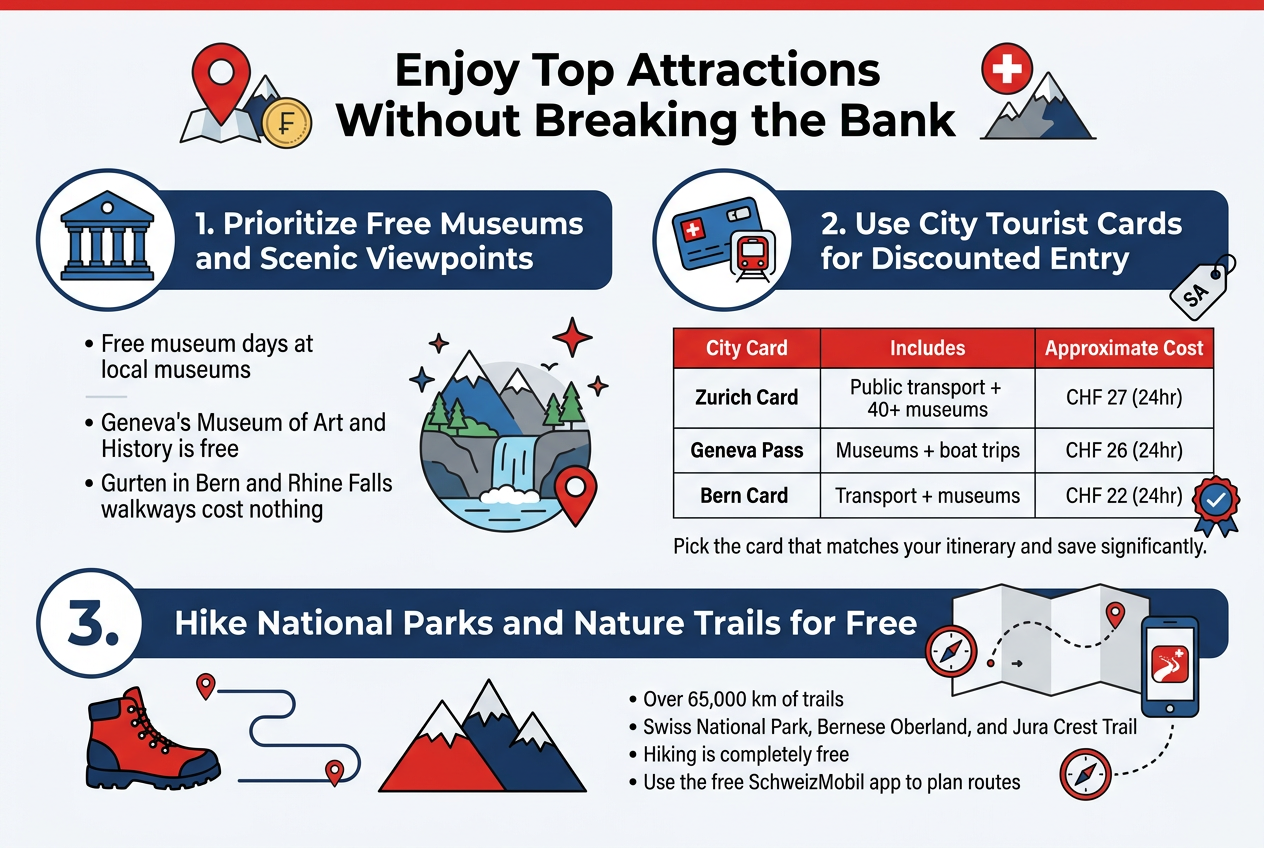
Prioritize Free Museums and Scenic Viewpoints
Switzerland has some genuinely free experiences that rival anything you'd pay for. Many towns offer free entry to local museums on specific days — Geneva's Museum of Art and History, for example, is completely free. Scenic viewpoints like Gurten in Bern or the Rhine Falls walkways cost nothing and deliver jaw-dropping views.
Use City Tourist Cards for Discounted Entry
If you're staying a few days in a city, a tourist card pays for itself quickly. Here's a quick comparison:
| City Card | Includes | Approximate Cost |
|---|---|---|
| Zurich Card | Public transport + 40+ museums | CHF 27 (24hr) |
| Geneva Pass | Museums + boat trips | CHF 26 (24hr) |
| Bern Card | Transport + museums | CHF 22 (24hr) |
Pick the card that matches your itinerary and you'll save significantly on individual entry fees.
Hike National Parks and Nature Trails for Free
Switzerland's trail network spans over 65,000 km — and hiking is completely free. The Swiss National Park in Graubünden, Bernese Oberland trails, and the Jura Crest Trail offer world-class scenery without spending a franc. Grab the free SchweizMobil app to plan routes and track your progress easily.
Manage Your Money Wisely While Traveling
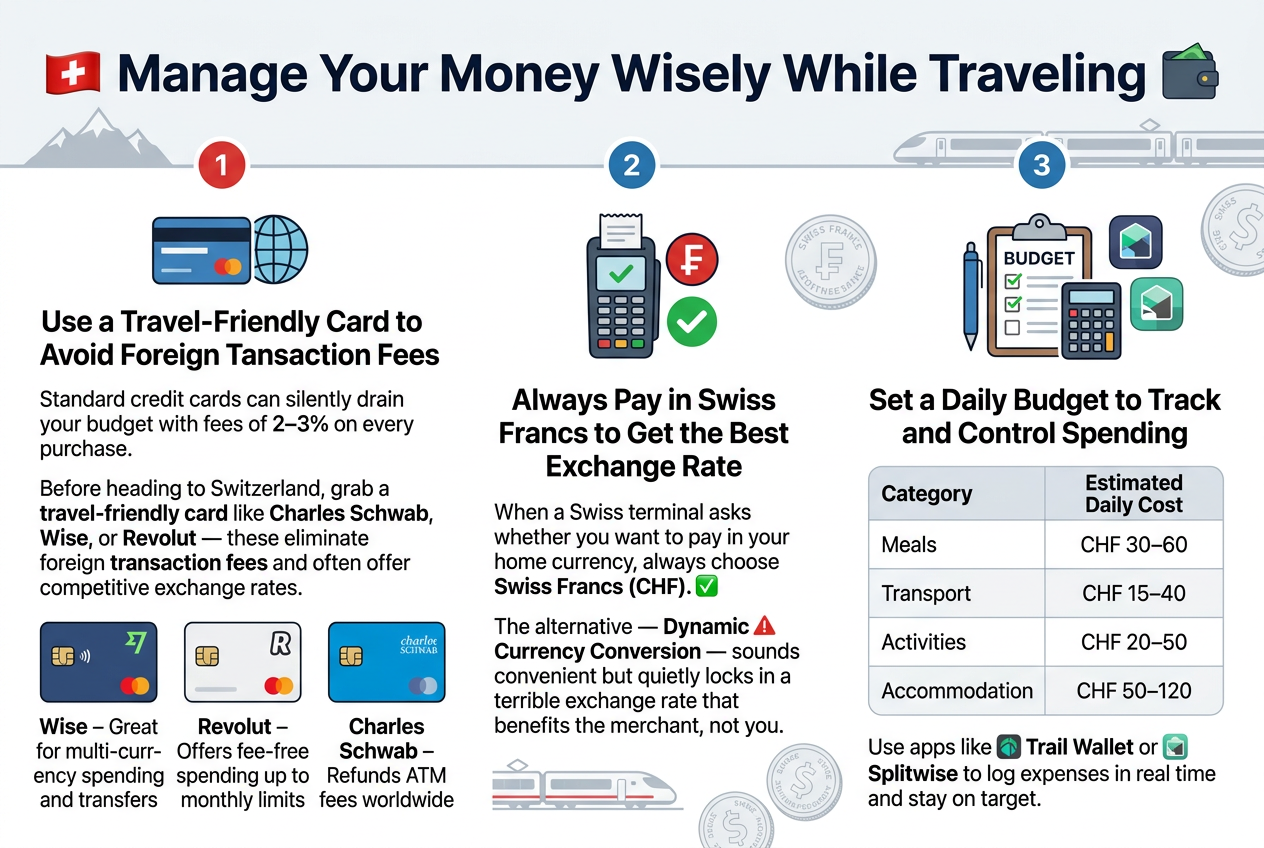
Use a Travel-Friendly Card to Avoid Foreign Transaction Fees
Standard credit cards can silently drain your budget with fees of 2–3% on every purchase. Before heading to Switzerland, grab a travel-friendly card like Charles Schwab, Wise, or Revolut — these eliminate foreign transaction fees and often offer competitive exchange rates.
-
Wise – Great for multi-currency spending and transfers
-
Revolut – Offers fee-free spending up to monthly limits
-
Charles Schwab – Refunds ATM fees worldwide
Always Pay in Swiss Francs to Get the Best Exchange Rate
When a Swiss terminal asks whether you want to pay in your home currency, always choose Swiss Francs (CHF). The alternative — Dynamic Currency Conversion — sounds convenient but quietly locks in a terrible exchange rate that benefits the merchant, not you.
Set a Daily Budget to Track and Control Spending
Switzerland is expensive, so tracking spending daily keeps surprises away. A realistic daily budget looks something like this:
| Category | Estimated Daily Cost |
|---|---|
| Meals | CHF 30–60 |
| Transport | CHF 15–40 |
| Activities | CHF 20–50 |
| Accommodation | CHF 50–120 |
Use apps like Trail Wallet or Splitwise to log expenses in real time and stay on target.
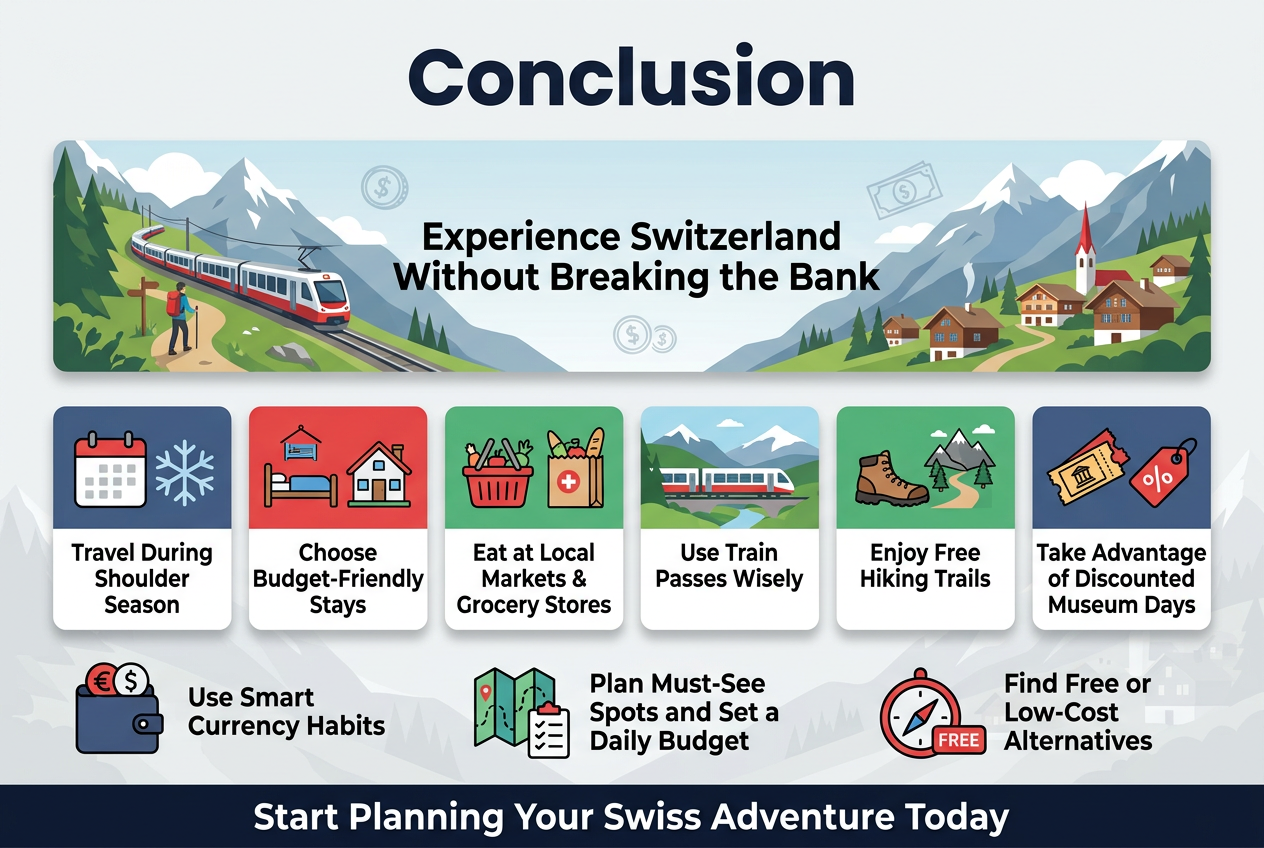
Switzerland doesn't have to drain your bank account, even though it has a reputation for being one of the priciest destinations in the world. By traveling during the shoulder season, choosing budget-friendly stays like hostels or vacation rentals, eating at local markets and grocery stores, and using scenic train passes wisely, you can experience everything this stunning country has to offer without the financial stress. Free hiking trails, discounted museum days, and smart currency habits go a long way in keeping your spending in check.
A little planning before you go makes all the difference. Map out your must-see spots, set a daily budget, and look for free or low-cost alternatives to the typical tourist traps. Switzerland's breathtaking landscapes, charming villages, and incredible food scene are absolutely worth experiencing — and with the right approach, they're more within reach than you might think. Start planning your Swiss adventure today with these tips in your back pocket, and get ready to fall in love with Switzerland without the buyer's remorse.
Post a Comment